Essential Steps to Launching a Successful Remote Notarization Business in Ohio
- Amy Curtis

- Jun 4
- 3 min read
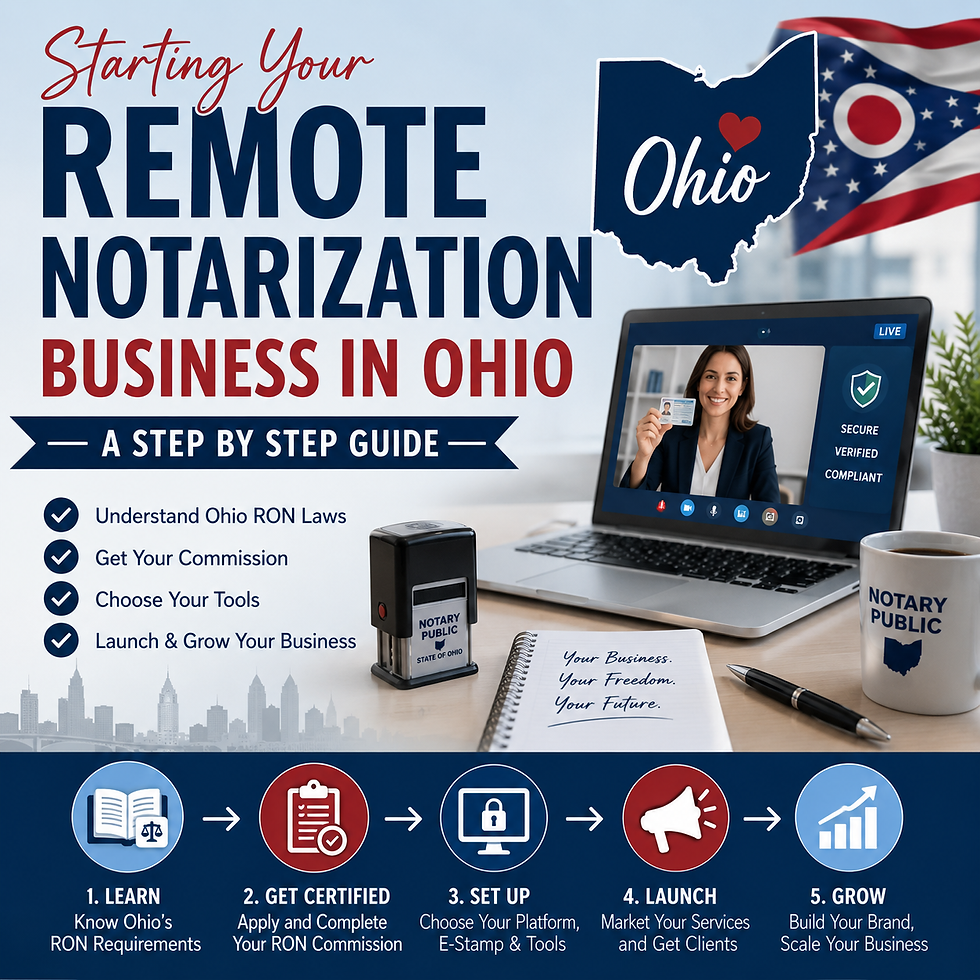
Starting a remote notarization business in Ohio offers a promising opportunity, but it requires more than just obtaining a commission. Ohio law mandates that notaries first hold a traditional notary commission before performing remote online notarizations (RON). Beyond licensing, building a thriving business demands careful planning, marketing, and understanding the unique challenges of this service. This guide walks you through the essential steps to launch and grow a remote notarization business in Ohio.

Understand Ohio’s Notary and Remote Notarization Requirements
Before starting your business, you must meet Ohio’s legal requirements:
Obtain a Traditional Notary Commission
Ohio requires all remote notaries to first be commissioned as traditional notaries. This involves submitting an application, passing a background check, and paying the required fees.
Apply for a Remote Online Notary Commission
After becoming a traditional notary, you can apply for the RON commission. This includes additional training and approval from the Ohio Secretary of State.
Use Legally Compliant Technology
Ohio mandates that remote notarizations use a technology platform that meet security and identity verification standards. They recommend that the platform is MISMO approved.
Understanding these steps ensures you comply with state law and avoid penalties.
Set Up Your Business Structure and Finances
Launching a business requires more than just legal compliance. You need a solid foundation:
Choose a Business Structure
Decide whether to operate as a sole proprietor, LLC, or other entity. An LLC can offer liability protection and may be preferable for a professional service.
Register Your Business
Register your business name with the Ohio Secretary of State and obtain any necessary local licenses.
Open a Business Bank Account
Keep your personal and business finances separate to simplify accounting and taxes.
Set Your Pricing
Research local competitors and state fee limits to set competitive and profitable rates for your notarization services.
Select Reliable Remote Notarization Software
No remote notarization software will automatically generate clients for you. Unlike gig economy platforms, RON services require proactive marketing and client outreach. When choosing software, consider:
Legally Compliant Online Software
Use only platforms approved by Ohio for remote notarizations.
User Experience
The software should be easy for both you and your clients to use, with clear instructions and smooth video and document handling.
Security Features
Look for strong identity verification, tamper-evident seals, and encrypted data storage.
Cost and Support
Compare subscription fees and customer support options to find a platform that fits your budget and needs.
Develop a Business and Marketing Plan
Simply having a remote notarization commission and software does not guarantee success. You need a plan to attract and retain clients:
Identify Your Target Market
Potential clients include real estate agents, law firms, title companies, financial institutions, and individuals needing notarizations.
Build a Professional Website
Your website should explain your services, pricing, and how remote notarization works. Include a booking system for appointments.
Network with Local Professionals
Reach out to real estate offices, law firms, and banks to introduce your services. Offer demonstrations or free trials to build trust.
Use Local SEO and Online Listings
Optimize your website for local search terms like “remote notary Ohio” and list your business on Google My Business and other directories.
Leverage Testimonials and Referrals
Ask satisfied clients to provide reviews and refer others. Positive word-of-mouth is crucial in this service industry.
Manage Operations Efficiently
Running a remote notarization business involves more than notarizing documents:
Schedule Appointments Effectively
Use calendar tools to manage bookings and avoid conflicts.
Maintain Records and Compliance
Keep detailed logs of all notarizations as required by Ohio law.
Provide Excellent Customer Service
Clear communication and prompt responses build client loyalty.
Stay Updated on Legal Changes
Remote notarization laws and technology evolve. Stay informed to maintain compliance and offer the best service.
Overcome Common Challenges
Launching a remote notarization business has hurdles:
Generating Consistent Work
Unlike ridesharing or delivery apps, RON platforms do not provide a steady stream of clients. You must actively market and network.
Building Trust
Clients may be hesitant to use remote notarization. Educate them on its legality and security.
Technical Issues
Prepare for occasional software glitches or connectivity problems. Have backup plans and clear instructions for clients.
Example: Building a Client Base in Ohio
Consider Jane, a newly commissioned remote notary in Columbus. She started by contacting local real estate agents and offering free remote notarization demos. She created a simple website with clear pricing and an online booking calendar. Jane also joined local business groups and attended networking events. Within three months, she secured contracts with two title companies and several individual clients. Jane’s proactive approach and clear communication helped her build a profitable business.


Comments